
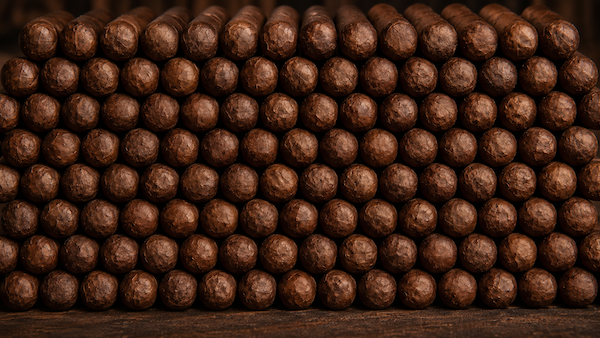
Proper cigar storage comes down to one thing: stability. A cigar is a natural product made from living tobacco leaf, and whether you're storing five sticks in a desktop humidor or a few hundred in a coolerdor, the goal is the same, keep the temperature steady, the humidity consistent, and the environment free from light, heat, and anything that doesn't belong there. This guide covers everything you need to know about seasoning a humidor, dialing in the right humidity, preventing tobacco beetles, dealing with mold, aging, travel, and the daily habits that keep your collection smoking the way it should.
- Cigars need two things to stay in peak condition: stable humidity (65-72% RH) and stable temperature (65-70 degrees F). Swings in either direction do more damage than a consistently imperfect environment.
- Season a new humidor before you put anything in it -- a dry cedar box will pull moisture out of your cigars. Takes 24-48 hours with a shot glass of distilled water and a humidification device to get the wood equilibrated.
- No humidor? A coolerdor -- a sealed cooler with a Boveda pack -- works just as well as a $200 box and costs about $15 to set up.
WHY STORAGE ACTUALLY MATTERS
Cigars are hygroscopic, they naturally absorb and release moisture based on the environment around them. That sounds simple enough until you realize how quickly things can go wrong in either direction.
- Too dry: The wrapper becomes brittle and can crack. The cigar burns hot and fast. The flavor turns sharp, harsh, or flat. The aroma fades.
- Too wet: The cigar feels spongy, the draw tightens up, the burn becomes uneven, and the flavor can turn sour or musty. In worst cases, excess moisture creates conditions for mold.
- Too hot: You increase the risk of tobacco beetles, mold, and accelerated deterioration.
- Too much sunlight or heat fluctuation: You get dry spots, humidity swings, fading, and wrappers that crack or split.
The goal is not perfection at every second of every day. The goal is stability. Cigars can handle a minor drift. What they can't handle is constant swings, neglect, or an environment that's fighting against them.
THE RIGHT HUMIDITY AND TEMPERATURE RANGE
The old "70/70 rule", 70% RH and 70°F, is easy to remember, but it isn't always the best target for every setup, every climate, or every cigar. Most experienced smokers today run a slightly tighter range and get better results for it.
A SOLID EVERYDAY RANGE
- 65% to 69% RH, works for most premium cigars in most setups
- 64°F to 70°F, keeps beetle risk low and humidity stable
- Cigar Aficionado recommends 65% to 70% RH and 65°F to 70°F, with stability being the bigger priority than hitting a single magic number
The type of container you're using matters too. A traditional wooden desktop humidor breathes a little and may need a 69% or 72% humidity pack to actually land in the high 60s. An airtight tupperdor or coolerdor holds moisture more tightly, so a 65% pack is often enough. The number on the pack is only part of the picture, your humidor's seal, your room temperature, how often you open the lid, and how full the humidor is all affect the real reading inside.
| SETUP OR CIGAR TYPE | PRACTICAL RH RANGE | NOTES |
|---|---|---|
| Most premium cigars | 65% to 69% | Reliable everyday range for most smokers |
| Traditional wooden humidor | 69% to 72% pack | Wood absorbs some; actual RH may land lower |
| Airtight acrylic humidor | 65% to 69% pack | Holds moisture tightly |
| Tupperdor or coolerdor | 65% to 69% pack | Very stable due to minimal air exchange |
| Long-term aging | 62% to 65% | Reduces mold risk; slows things down |
| Cuban cigars | 62% to 65% | Often tightly rolled; more mold-prone at higher RH |
| Dense, oily, or dark wrappers | 62% to 65% | Maduros, heavy Broadleaf, San Andrés |
| Dry climate or drafty humidor | 72% pack | May be needed if humidor struggles to hold the high 60s |
STABILITY BEATS OBSESSION
Here's where newer cigar smokers get themselves into trouble. They see the hygrometer tick from 68% to 66%, and suddenly they're adding packs, wiping cedar, cracking the lid, closing the lid, and basically turning their humidor into a science experiment that runs 24 hours a day.
Don't do that. A small daily drift is completely normal. The real problem is big swings, if your humidor is bouncing between 60% and 75%, that needs attention. But a two-point move? Relax. Cigars respond to the trend, not the moment. Check it, note it, and resist the urge to intervene every time the number breathes.
SEASONING A HUMIDOR: WHAT IT MEANS AND WHY IT MATTERS
If you just bought a new humidor, this is the first thing you do, before a single cigar goes inside.
Seasoning a humidor means preparing the Spanish cedar lining so it holds moisture properly before your cigars ever touch it. This is non-negotiable with any traditional wooden humidor and one of the most commonly skipped steps by new smokers, usually because nobody told them it was necessary.
Here's why it matters: dry cedar is thirsty. If you put cigars into a brand-new, unseasoned humidor, the wood will pull moisture out of your cigars. Then you'll wonder why they feel dry even though you've added humidity packs. The short answer is that the wood took it first. You are not seasoning the cigars. You are seasoning the wood.
The Simple Way: 84% Seasoning Packs
The cleanest, most controlled method is using 84% humidity seasoning packs in an empty wooden humidor for approximately two weeks.
- 1EMPTY THE HUMIDOR
Remove everything from the humidor, it should be completely empty.
- 2PLACE THE 84% PACKS
Add the correct number of seasoning packs inside, one standard pack per roughly 25 cigars of humidor capacity; larger humidors may need larger or multiple packs.
- 3CLOSE AND WAIT
Close the lid and leave it closed for about two weeks. Do not keep opening it to check.
- 4SWAP TO STORAGE PACKS
After two weeks, remove the 84% packs and replace with your regular storage packs, 65%, 69%, or 72% depending on your setup.
- 5ADD YOUR CIGARS
Now, and only now, add your cigars. Two weeks of patience before you load it up is worth every day.
CRITICAL NOTE
84% seasoning packs are for seasoning an empty wooden humidor only. Do not put cigars in the humidor while the 84% packs are working. That level of humidity is far too high for storing cigars.
WHERE TO STORE YOUR HUMIDOR
Location matters more than most people realize. Your humidor is not a force field, if the room around it is hot, bright, dry, or constantly changing, it has to fight harder to protect what's inside.
GOOD LOCATIONS
- A closet or cabinet
- A basement room that isn't too damp
- A shaded bookshelf away from windows
- A dedicated cigar room
- A wineador for larger collections needing temperature control
WHAT TO AVOID
- Windowsills or anywhere with direct sunlight
- Near heaters, radiators, or heating vents
- Near air conditioning vents
- On top of a refrigerator
- In a car, garage, or anywhere that swings with outdoor temperatures
CELLOPHANE: ON OR OFF?
This is one of those debates that never fully ends in cigar circles. Here's the honest answer: both are fine, and the right call depends on how and where you're storing the cigars.
Leaving cellophane on helps protect the wrapper from physical damage, rubbing, chipping, cracking, or unraveling when cigars shift against each other. Cellophane still allows moisture exchange, so it doesn't hermetically seal the cigar away from the humidor environment.
Taking cellophane off lets cigars breathe freely, rest together, and settle naturally in the humidor. Many smokers prefer this for long-term home storage because the cigars can interact with the cedar around them. A practical approach: take it off at home, keep it on when traveling.
DRY BOXING: A SMALL STEP THAT MAKES A REAL DIFFERENCE
One technique that doesn't get enough attention is dry boxing, the practice of removing a cigar from the humidor and letting it sit in a simple cedar box or empty container without any humidification for 24 to 72 hours before smoking it.
The brief drop in moisture, typically a few percentage points, can tighten up the burn, improve combustion, and allow certain flavor notes to come through more clearly. This is especially worth trying for fuller or denser sticks that can feel heavy or slow when smoked straight out of the humidor. It's not a step you need for every cigar, but for a special smoke or when a cigar feels a little wet, it's worth the extra day or two of patience.
SEPARATING CIGARS BY TYPE
If you have 15 or 20 cigars, don't overthink organization. If you have a larger collection, separation genuinely helps protect what you've built. Some cigars are bold, oily, and aromatic. Others are light, delicate, and nuanced. If you throw them all together in one pile, the stronger cigars will gradually influence the aroma of the milder ones over time.
- Keep similar cigars together and use cedar dividers between different blends or strength levels
- Keep lighter Connecticut Shade cigars away from dark Maduros, heavy Broadleaf, or bold full-bodied sticks
- Store long-term aging cigars in their own section or box
- Always store infused cigars completely separately, a vanilla or coffee-infused cigar can share its aroma across an entire humidor
MOLD VS. PLUME: KNOW THE DIFFERENCE
This one matters because the wrong call can cost you cigars.
Mold can appear white, blue-green, or dusty. It may look fuzzy or patchy. It can show up on the wrapper, the foot, or in extreme cases, inside the cigar. Mold usually means too much moisture, poor airflow, warm storage, or contamination. If you spot it on the foot, treat it seriously, it may have grown into the filler.
Plume (sometimes called bloom) is a much rarer occurrence. It's described as a fine crystalline surface that can appear when tobacco oils rise to the wrapper and crystallize over long aging. True plume looks more like a light shimmer or dusting than fuzzy growth. It's not fuzzy. It's not colored. It doesn't spread.
PRACTICAL RULE
If it's fuzzy, raised, spreading, colored, or on the foot, treat it like mold. Don't gamble with your collection hoping it's something better.
TOBACCO BEETLES: WHAT THEY ARE AND HOW TO HANDLE THEM
Tobacco beetles (Lasioderma serricorne) are tiny pests that can lay microscopic eggs in tobacco. The beetles themselves aren't the main problem, it's the larvae that hatch and bore through your cigars from the inside. The result is small round holes in the wrapper, fine tobacco dust in the humidor, and cigars that look like someone attacked them with a miniature drill. Beetles become a serious threat when temperature climbs. Keeping your humidor below 70°F is one of the most reliable ways to prevent a beetle problem before it starts.
Signs of Tobacco Beetles
- Tiny round holes in the wrapper
- Fine tobacco dust in the humidor
- Small beetles moving inside the humidor
- Damaged or tunneled cigars
What to Do If Beetles Show Up
- 1ISOLATE IMMEDIATELY
Remove and isolate the affected cigars. Inspect nearby cigars carefully for holes and tobacco dust.
- 2CLEAN THE HUMIDOR
Empty and clean out the humidor, wipe it down with a lightly damp cloth. No cleaners or disinfectants.
- 3BAG AND REFRIGERATE FIRST
Place remaining cigars in an airtight bag, squeeze out excess air, and refrigerate for a few hours to begin the temperature drop gradually.
- 4FREEZE FOR 24–48 HOURS
Move the bagged cigars to the freezer for 24 to 48 hours. Cold kills beetles and larvae.
- 5RETURN GRADUALLY
Move back to the refrigerator for a day to slowly warm back up, then return to room temperature before re-humidifying and placing back in the humidor. The key is gradual temperature change in both directions, a cigar pulled straight from the freezer into a warm room can split the wrapper.
TRAVEL STORAGE
A travel humidor is not permission to abuse your cigars, it's a layer of protection that has its limits. Cigars shift and knock against each other in transit, which is why keeping them in cellophane while traveling is a smart call even if you normally smoke without it. The cellophane protects the wrapper from rubbing, chipping, and foot damage.
- Use a crush-resistant travel humidor and don't overpack it
- Keep cigars in cellophane when possible during transit
- Keep the travel humidor out of direct sun and away from car heat
- Avoid leaving it in a hot car, even for an hour
- Let cigars rest when you arrive, especially after major climate changes
LONG-TERM AGING
Aging cigars properly can be genuinely rewarding, but only if the storage behind it is solid. For long-term aging, many experienced collectors prefer a slightly lower RH, typically 62% to 65%, because it reduces mold risk and allows the tobacco to develop more slowly and evenly over time.
GOOD CANDIDATES FOR AGING
- Well-constructed premium cigars with good oil content
- Fuller cigars with enough strength to develop
- Boxes or multiples of a cigar you already enjoy and want to watch evolve
- Cigars stored in stable, controlled conditions from the start
POOR CANDIDATES FOR AGING
- Already dry or damaged cigars
- Poorly constructed sticks
- Cigars you don't like now, aging won't fix a bad cigar
- Overly mild cigars with little structure or complexity
Aging can improve balance, smoothness, and integration. It does not turn a mediocre cigar into a masterpiece.
HUMIDOR OPTIONS: CHOOSING WHAT'S RIGHT FOR YOU
WOODEN DESKTOP HUMIDOR
The classic. It looks great, smells great, and gives you the traditional cigar experience. It needs proper seasoning, a good seal, and a little more regular maintenance than other options. Best for collections under a few hundred cigars.
TUPPERDOR
An airtight plastic container repurposed for cigar storage. Not romantic, but genuinely effective. Add cedar sheets or trays, a humidity pack, and a calibrated hygrometer. It holds humidity tightly and requires minimal maintenance. Great as a secondary storage solution or a budget-friendly starting point.
COOLERDOR
A larger cooler used for bulk cigar storage, especially useful if you're storing boxes. Affordable, very stable, and effective. Not exactly living room décor, but hard to beat for the price per cigar stored.
WINEADOR
A wine cooler adapted for cigars. The real advantage here is temperature control. If your home runs warm or you have a larger collection, a wineador with proper humidity control and cedar trays gives you the most stable environment short of a dedicated cigar room. Best for serious collectors.
AT A GLANCE: WHICH STORAGE SETUP IS RIGHT FOR YOU?
| STORAGE METHOD | IDEAL RH TARGET | BEST FOR | MAIN ADVANTAGE | MAIN DRAWBACK |
|---|---|---|---|---|
| Wooden Desktop Humidor | 65%–72% (pack at 72% to land at 65–69%) | Collections under ~200 cigars; living room display | Classic experience, beautiful presentation | Requires seasoning, more regular upkeep |
| Tupperdor | 65%–69% | Budget-conscious storage, secondary overflow humidor | Airtight seal holds RH extremely well, low maintenance | No aesthetic appeal; no Spanish cedar buffer |
| Coolerdor | 65%–69% | Bulk collections, box storage | Large capacity at low cost; stable and effective | Bulky; not suitable for display |
| Wineador | 65%–69% | Serious collectors; warm climates | Active temperature control, best defense against beetles | Higher cost; requires added cedar and humidity management |
| Travel Humidor / Case | 65%–69% | Short trips, protecting 5–10 cigars on the road | Purpose-built for transport; protects wrappers | Limited capacity; not for long-term storage |
BASIC MAINTENANCE SCHEDULE
| FREQUENCY | WHAT TO CHECK |
|---|---|
| Weekly | Glance at the hygrometer. Confirm no major RH or temperature swings. Check that the seal feels normal. |
| Monthly | Inspect and rotate cigars. Look for cracked wrappers, mold, beetle holes, or soft cigars. Check humidity packs. Confirm airflow isn't blocked. |
| Every 2–3 Months | Replace humidity packs if they've become firm or rigid. Check the humidor seal. Clear out loose tobacco dust. |
| Seasonally | Watch for room temperature changes, dry winter air and summer heat both affect storage. Adjust humidity if your home environment shifts significantly. |
| Yearly | Calibrate hygrometers. Deep-inspect the collection. Reorganize by type, age, or smoking priority. Re-season only if the humidor genuinely needs it. |
COMMON STORAGE MISTAKES
- Storing the humidor in direct sunlight. Even a few hours in direct sun can damage cigars and the humidor itself.
- Chasing one perfect humidity number. The goal is stability across a range, not hitting 67.0% every single day.
- Using an uncalibrated hygrometer. If the reading is wrong, every decision you make based on it is also wrong.
- Mixing infused cigars with traditional cigars. Infused cigars share their aroma. Keep them completely separate.
- Using 84% seasoning packs with cigars inside. 84% packs are for seasoning empty wood only.
- Overpacking the humidor. Cigars need airflow. If the lid won't close without force, you need more space.
- Ignoring temperature. Storing cigars at 75°F or higher creates real problems, including beetle risk.
- Overcorrecting small drifts. Small movement is normal. Panic-adding packs every time the number ticks down is how you create the instability you're trying to avoid.
GLOSSARY
| TERM | DESCRIPTION |
|---|---|
| Humidor | A storage container designed to maintain stable humidity so cigars stay fresh, smokeable, and protected. |
| Seasoning | The process of preparing the Spanish cedar inside a new wooden humidor so it holds moisture properly before any cigars are added. |
| Relative Humidity (RH) | The amount of moisture in the air expressed as a percentage of what the air can hold at that temperature. RH controls how moist or dry the tobacco stays. |
| Spanish Cedar | The wood most commonly used to line cigar humidors. It buffers humidity, supports cigar aroma, resists mold, and helps deter tobacco beetles. |
| Humidity Pack | A two-way humidity regulator that releases or absorbs moisture as needed to maintain a target RH inside the humidor. |
| 84% Seasoning Pack | A high-humidity pack used only to season an empty wooden humidor. Not for use with cigars inside. |
| Hygrometer | A device that measures relative humidity. Digital models are generally more accurate than analog. |
| Calibration | The process of verifying and adjusting a hygrometer so its reading is accurate. |
| Tupperdor | An airtight plastic container used as a simple, effective cigar storage system. |
| Coolerdor | A larger cooler used for storing bulk cigar collections, typically with cedar and humidity packs added inside. |
| Wineador | A wine cooler converted for cigar storage, valued for its temperature control in warm environments. |
| Dry Boxing | The practice of placing a cigar in a cedar box or container without humidification for 24 to 72 hours before smoking to slightly lower the RH and improve the burn. |
| Cellophane | The protective sleeve on many cigars. Allows moisture exchange while protecting the wrapper from physical damage, especially useful for travel. |
| Mold | Fungal growth caused by excess moisture, poor airflow, or contamination. Can appear white, blue-green, or fuzzy. Should be treated seriously. |
| Plume (Bloom) | A rare, fine crystalline surface on aged cigars caused by tobacco oils rising and crystallizing. Unlike mold, it is not fuzzy, not colored, and does not spread. |
| Tobacco Beetle | A tiny insect (Lasioderma serricorne) whose larvae bore holes through cigars from the inside. Warm storage increases the risk. |
| Quarantine | Separating new or suspicious cigars from the main collection until they can be inspected and confirmed safe. |
| Rotation | Moving cigars within the humidor, top to bottom, front to back, to ensure even humidity exposure and catch developing issues early. |
| Long-Term Aging | Storing cigars for months or years under stable, controlled conditions to allow the tobacco to mellow, integrate, and develop. |
| Hygroscopic | The property of tobacco that causes it to naturally absorb and release moisture from the surrounding environment. |
| Over-Humidified | A cigar that has absorbed too much moisture. It may feel soft or spongy, draw tightly, burn unevenly, or taste sour. |
| Under-Humidified | A cigar that has become too dry. It may crack, burn hot and fast, taste harsh, or lose aroma. |
FREQUENTLY ASKED QUESTIONS
Everything you need to know about storing, seasoning, and maintaining your cigar collection.