Lighting a cigar isn't complicated. But it's one of the most misunderstood steps in the whole experience. Do it right and the cigar rewards you from the first puff. Rush it, scorch it, or skip the toast, and you'll be fighting that stick for the next hour wondering why a $30 cigar tastes like an ashtray. Here's everything you need to know, from the right technique to the best tool for every situation.
- Toast the foot first -- hold the flame near the tobacco without touching it until the edge glows -- then take gentle puffs to bring the coal to life. Rushing this step sets up an uneven burn you'll fight for the rest of the smoke.
- Use a butane lighter or cedar match when you can. Soft-flame lighters, candles, and paper matches all introduce unwanted flavors that interfere with the tobacco in the first few draws.
- The whole lighting process should take 30-60 seconds. If it feels rushed, it probably is.
Before the Flame: Start With a Clean Cut
Before any flame gets near the cigar, you need a proper cut. A mangled cap, a cut that's too deep, or a barely-opened head all make lighting harder, and they guarantee burn problems down the road. Cut the cap only, take off roughly the width of a dime, use a sharp cutter, and take a cold draw first. If air moves through the cigar comfortably, you're ready. If it feels like sucking through a brick wall, no flame is going to fix that.
For a complete walkthrough, read our guide: The Complete Guide to Cutting a Cigar the Right Way →
The Golden Rule: Toast First, Light Second
This is where most people go wrong. And it's the single biggest thing separating a good light from a harsh, uneven mess.
A cigar is not a cigarette. You're not in a hurry. The goal is to gently warm the foot, the open end, until it starts to catch evenly before you ever take a draw. Think of it the way Cigar Aficionado puts it: like toasting a marshmallow over a campfire. You hold it near the flame, not in it. You rotate it. You let the heat do the work.
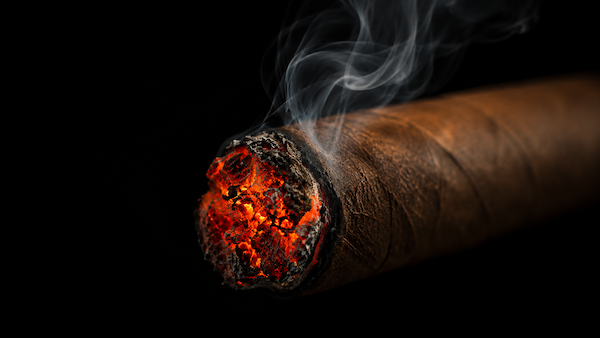
Toasting means holding the flame near the foot, rotating the cigar slowly, letting heat char the outer edge evenly before you ever bring the cigar to your lips. The foot should show a faint, even glow across the whole surface before the first puff.
Toasting and burning are not the same thing. Toasting warms the tobacco and prepares it to light cleanly. Burning happens when you jam the flame in and hold it. That harsh, bitter first puff people blame on the cigar? Most of the time it's bad technique, not the tobacco.
The Lighting Methods Worth Knowing
Soft Flame Lighter
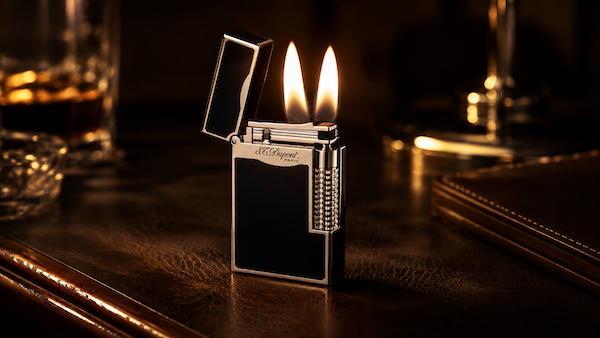
A soft flame produces a traditional yellow flame, gentler, more forgiving, and easier to control than a torch. It's the most versatile indoor lighter for premium cigars, giving you time and precision without the risk of scorching the foot. The trade-off is wind, a soft flame will die outdoors.
Best for:
INDOOR SMOKING SMALL RING GAUGE PREMIUM CIGARS TOUCH-UPS- Let the flame settle before bringing it near the cigar
- Hold the cigar above the flame, not buried in it
- Keep the flame just off the foot, rotating slowly
- Toast the outer edge first, then draw inward
- Bring the cigar to your mouth, puff gently while continuing to rotate
- Check the foot for an even orange glow
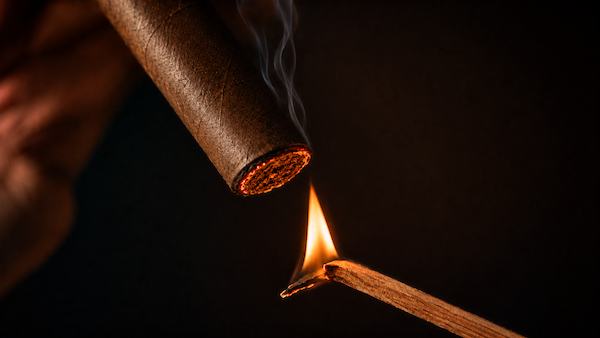
Cedar Spill
A cedar spill is a thin strip of Spanish cedar, cut from the sheets inside a cigar box, that you light first, then use to toast and light the cigar. It's one of the oldest and most elegant lighting methods in the cigar world. The cedar burns cleanly and adds a subtle woody aroma to the early puffs that many aficionados genuinely love. There's also something satisfying about the whole ritual of it.
You can make your own from the cedar sheets in a box, or buy professionally made ones. Either way, cut them about a quarter to half an inch wide and light the thin end first.
Best for:
INDOOR SMOKING SPECIAL OCCASIONS LOUNGE SETTINGS CEREMONY & RITUAL- Light the cedar strip with a match or lighter
- Hold it at a slight downward angle so the flame travels up the spill
- Hold the cigar above the flame, rotating slowly, keep the cigar over, not in, the orange triangle of flame
- Toast gently and evenly until the foot starts to glow
- Bring the cigar to your mouth and puff gently while rotating
- Use a second strip if needed, no rush
One note: Cedar spills create ash and can drop embers. Not ideal in a moving car or while wearing anything you care about.
Torch Lighter (Single, Double, Triple)
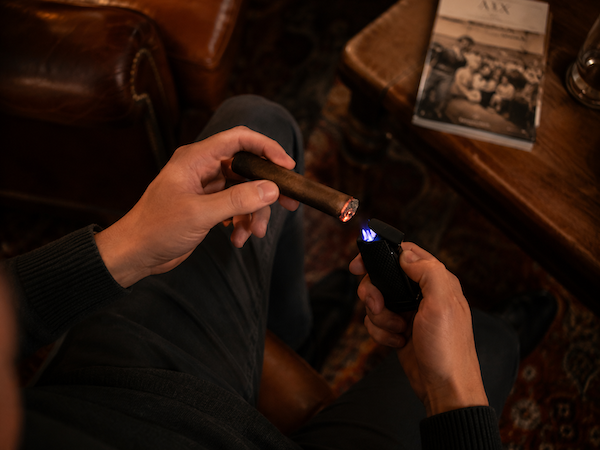
A torch lighter runs a focused blue jet flame, hotter, more precise, and far better in wind than a soft flame. It's probably the most practical everyday lighter for most cigar smokers. The key word with any torch is distance. That flame is hotter than it looks.
A single torch is the most controlled. A double torch covers more surface area and lights larger ring gauges faster. A triple or quad torch earns its place with Gordos and large ring gauges outdoors, but hold it well back and keep rotating constantly, because there's no forgiveness if you park it in one spot.
Best for:
OUTDOOR SMOKING PATIOS & GOLF MEDIUM–LARGE RING GAUGE WIND- Hold the torch at least a half inch from the foot, don't jam it in
- Aim the heat at the outer edge first
- Rotate slowly through the entire circumference
- Once the foot begins to glow, bring the cigar to your mouth
- Puff gently, continuing to rotate as you draw
- Check and touch up any dark spots before settling in
Cigar Matches & Long Matches
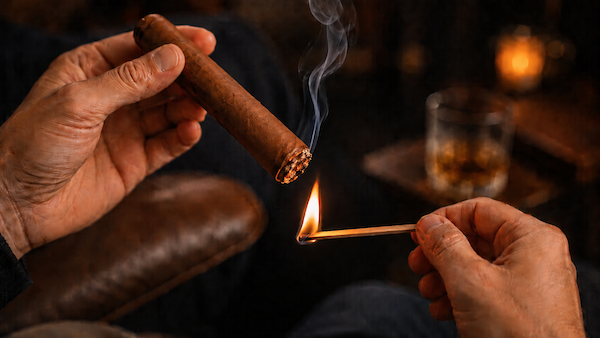
Cigar-specific matches are made from wood, not paper, and run at least 3.5 inches long with sulfur-free heads. The extra length gives you time and control to toast the foot properly without burning your fingers or rushing. Regular matches work in a pinch, but they're short, they burn fast, and the match head can taint the flavor if you don't wait.
The rule with any match: always let the head burn completely off before bringing the flame near the cigar. That first second of ignition, the flash of sulfur and combustion, is not something you want drawn through your tobacco. Wait it out, even if it only takes a second or two.
Best for:
INDOOR SMOKING LOUNGES PREMIUM CIGARS TRADITIONAL RITUALWood burns cooler than butane. Be patient, you may need two or three matches for a larger cigar, and that's completely fine.
Other Options Worth Knowing
Combination Soft Flame + Torch: Some lighters offer both in one unit, genuinely handy if you move between indoor and outdoor smoking. Use the soft flame when you have time and shelter; use the torch in wind or for quick touch-ups.
Tabletop Lighter: The kind you find in well-stocked home lounges and quality cigar bars. Heavier, more stable, often with a powerful flame. Great for sharing in a group setting, just watch the flame height.
Disposable Butane Lighter: Not glamorous, but practical. A disposable lighter can absolutely get the job done as long as you use the same technique, keep the flame off the tobacco, rotate, toast slowly.
Lighting Step by Step
-
1CUT THE CIGAR CLEANLY
Cap only, no deeper than a dime's width. Sharp cutter, decisive motion. Then take a cold draw to confirm airflow feels right.
-
2TOAST THE OUTER EDGE
Hold the flame near the foot, not touching it. Rotate slowly, warming the outer edge of the foot evenly. Think marshmallow over a campfire, not marshmallow in a bonfire.
-
3WORK INWARD
Once the outer ring is showing a faint char and glow, move the heat gradually toward the center of the foot, continuing to rotate.
-
4BRING THE CIGAR TO YOUR MOUTH
Hold the flame slightly away from the foot. Take a few gentle puffs while rotating. Don't rush and don't pull hard, you're waking the cigar up, not forcing it.
-
5CHECK THE FOOT
Take the cigar out of your mouth. Blow gently on the foot. The entire surface, outside edge and center, should glow evenly orange. If not, touch up now.
-
6TOUCH UP ANY DARK SPOTS
A quick pass with the lighter on any slower-burning section before you settle in. Two seconds now saves you from fighting a canoeing burn for the next hour.
-
7LET THE CIGAR SETTLE
Take your time with the first few puffs. Slow and steady. You're establishing the burn line, not racing to the final third.
Quick Reference: Best Method by Situation
Not sure where to start? Pick your situation and you're done.
| Situation | Best Choice |
|---|---|
| Indoors, relaxed setting | Soft flame lighter or cedar spill |
| Outdoors or windy | Single or double torch |
| Large ring gauge cigar | Double or multi-torch, held well back |
| Small ring gauge cigar | Soft flame, cedar spill, or single torch |
| Traditional or ceremonial | Cedar spill or long cigar match |
| Beginner | Single torch or soft flame |
| Backup or emergency | Disposable butane lighter |
Lighting by Cigar Shape
| Shape | Best Method | Notes |
|---|---|---|
| Robusto | Soft flame, single torch, cedar spill | Standard foot, any method works well with proper technique. |
| Toro | Double torch, soft flame, cedar spill | Wider foot benefits from double torch or a patient soft flame toast. |
| Churchill | Any method | An even light from the start pays dividends over the long smoke. |
| Gordo / Large Ring | Double, triple, or quad torch held well back | Cedar spill works but takes more time. Multi-torch held at distance is most efficient. |
| Lancero | Soft flame or single torch | Narrow ring gauge, be gentle. A double torch can overheat the foot fast. |
| Torpedo / Belicoso | Same as a parejo once cut | Make sure the cut is right first. After that, standard technique applies. |
| Closed Foot | Soft flame or cedar spill only | You're lighting wrapper first, a torch is too aggressive here. Gentle and slow. |
Relighting a Cigar That's Gone Out
Cigars go out. It happens when you're deep in conversation, eating, or just taking your time. It's not a problem, and it's not a character flaw.
Tap off any loose ash from the foot. Blow gently through the head, this clears stale smoke from the draw so your first relit puff doesn't taste like yesterday. Toast the foot again the same way you lit it originally, outer edge first, rotate slowly, work inward. Then relight with a few gentle puffs.
If the cigar has been sitting out for a while, the relit smoke may taste slightly stale or bitter, especially in the first few puffs. That's normal. Give it a minute to settle before you make any judgments about the cigar itself.
Touch-Ups: Fixing an Uneven Burn
An uneven burn, where one side races ahead of the other, isn't a crisis. Wind, humidity, construction variation, and smoking pace can all cause it. The fix is simple: use a torch or soft flame, target only the slower-burning side, and let the burn line catch up. You're making a small correction, not relighting the whole foot. A few seconds of patient attention usually sorts it.
Keeping Your Butane Lighter in Shape
Most of the time when a lighter sputters or produces a weak flame, it's either out of butane or hasn't been properly maintained. Here's the short version of how to keep it right:
Clear the jet area first. Dust, pocket lint, and tobacco flakes collect around the burner head and are one of the most common causes of inconsistent flame. Compressed air or a soft brush clears it without damaging the jets.
Use quality butane. Cheap butane clogs jets and creates inconsistent flame performance. Refined butane is worth the small extra cost.
Purge before refilling. Flip the lighter upside down, press the refill valve with a small tool, and let the hissing stop completely. That clears trapped air so the new butane fills the tank properly.
Refill, rest, adjust, test. Fill with clean butane, let it sit a few minutes, set the flame height, and test before you light a cigar with it.
Traveling With Cigar Lighters
Under current TSA and FAA rules, torch lighters, including jet flame and blue flame models, are not permitted in carry-on bags or checked luggage on U.S. flights. Disposable lighters have different rules. Always check the current guidelines before you travel. The simplest move: leave the torch at home and pick up a basic disposable at your destination.
Lighting Glossary
Seven terms every cigar smoker should know before they strike a flame.
| Term | Definition |
|---|---|
| Toasting | The first step of lighting, warming the foot of a cigar with the flame held slightly away from the tobacco, rotating slowly until the outer edge shows an even faint char. No draw is taken during toasting. This preps the foot to light cleanly and evenly. |
| The Foot | The open, cut end of the cigar that you light. The foot is where the filler, binder, and wrapper all meet at the bottom. A proper toast and light starts at the outer edge of the foot and works inward. |
| The Head | The closed end of the cigar, the end you cut and put in your mouth. Not to be confused with the foot. When relighting, you blow gently through the head to clear stale smoke before toasting the foot again. |
| Canoeing | An uneven burn where one side of the cigar runs faster than the other, creating a canoe-shaped channel of ash. Almost always caused by an uneven light. The fix: target the lagging side with a brief touch-up flame early, before it gets worse. |
| Cedar Spill | A thin strip of Spanish cedar, typically cut from cigar box liners, used as a lighting tool. Cedar burns cleanly, produces no fuel flavor, and imparts a subtle woody aroma to the early puffs. One of the most traditional ways to light a premium cigar. |
| Torch Lighter | A butane lighter that produces a focused, wind-resistant blue jet flame. Hotter and more precise than a soft flame. Available in single, double, and triple jet configurations, each adding surface coverage for larger ring gauges. Distance from the foot is critical. |
| Soft Flame Lighter | A lighter that produces a traditional yellow flame, gentler and more forgiving than a torch. Better suited to indoor smoking and smaller ring gauges where precision matters more than speed. Less wind-resistant, but preferred by many enthusiasts for delicate premium cigars. |
Do's and Don'ts
DO
- Use a clean butane flame
- Toast the foot before puffing
- Rotate the cigar constantly as you light
- Keep the flame slightly off the tobacco
- Blow on the foot to check for an even glow after lighting
- Touch up early, don't wait until it's canoeing
- Let the match head burn off before using it
- Take gentle puffs during the light
DON'T
- Bury the cigar directly in the flame
- Char or scorch the wrapper around the foot
- Puff too hard or too fast while lighting
- Rush the toast to get to the draw faster
- Ignore an uneven burn in the first third
- Blast a small ring gauge with a triple torch
- Forget to check the foot before settling in
- Use a candle, wax and scent contaminate the flavor
- Use a fluid or Zippo-style lighter, the fuel affects the taste
- Use anything with a strong fuel odor, if you smell it, you'll taste it
Frequently Asked Questions
Everything people ask about lighting, answered straight.