Picking your first cigar should feel exciting, not like you walked into a pop quiz. The problem is that most first-timers walk into a humidor and immediately feel like they're supposed to already know things. They're not. That's the whole point of starting.
- Your first cigar should be mild to medium in strength, smooth on the palate, and ideally a Robusto size, manageable smoke time, comfortable ring gauge, and easy to enjoy without overthinking it.
- Skip the "get the most expensive Cuban" trap. Start with a well-made Connecticut or Dominican cigar that matches where your palate actually is, not where you want to appear to be.
- The tobacconist is your best asset. Tell them you're new, you want something smooth, and you don't want to feel sick in the parking lot. They'll point you right.
A lot of new smokers walk in asking for the darkest, strongest, most impressive-sounding cigar because they assume that means better. It doesn't. The best first cigar matches your palate, your comfort level, and the amount of time you actually want to spend smoking. Let's build the full picture.
YOUR FIRST CIGAR IS NOT A TEST
Some people walk into a humidor like they're stepping up to a final exam. They see all the brands. They hear words like Connecticut, Habano, Maduro, Corojo, Cuban-seed, ligero, box-pressed, Toro, Robusto, and Perfecto, and they panic and grab whatever sounds the most impressive.
That's usually how someone ends up outside with a cigar that's too strong, too large, too dark, too expensive, and about 15 minutes later they're wondering why they feel like they just stepped off a tilt-a-whirl.
Your first cigar is not about impressing anyone. It's about having a good first experience. That means starting with something smooth, approachable, and genuinely enjoyable.
WHAT MAKES A GOOD FIRST CIGAR
There's no single right answer, but there are clear patterns. The cigars that work best for beginners share a few common traits.
WHAT TO LOOK FOR IN A FIRST CIGAR
- Mild to medium in strength, not a full-body nicotine bomb
- Smooth on the palate, creamy, easy, no aggressive spice or pepper on the finish
- Manageable size, a Robusto (5 × 50) is the safest starting point
- Even construction, burns consistently without needing constant attention
- Easy draw, not tight, not loose, just flows naturally
- 45 to 60 minutes of smoke time, enough to enjoy, not so long you feel trapped
For most beginners, look for a Connecticut Shade or Ecuadorian Connecticut wrapper. These typically bring cream, cedar, toast, light coffee, and gentle sweetness, smooth, balanced, and forgiving. That does not mean boring. A well-made Connecticut from a serious blender is genuinely beautiful tobacco.
BEST SIZE FOR YOUR FIRST CIGAR
Size matters, both for how the cigar smokes and how long you'll be committed to it. Here's the short version:
ROBUSTO, THE RECOMMENDED FIRST SIZE
Typically around 5 inches by 50 ring gauge. Long enough to develop flavor through the smoke, short enough that you're not committed to a two-hour sit-down. Burns well in the hand, comfortable to hold, and easy to manage. This is where most beginners should start and where most experienced smokers still reach.
TORO
Usually around 6 inches by 50 to 54 ring gauge. A good option if you want a slightly longer experience and have the time for it. Slightly more development in the final third compared to a Robusto.
CORONA
Usually 5.5 to 6 inches with a thinner ring gauge (42 to 44). Can be elegant and nuanced, but thinner cigars are less forgiving, they run hot if you smoke too fast, and draw issues are harder to manage. Worth exploring after you have a few smokes behind you.
Avoid anything with a 60+ ring gauge for your first smoke. Big cigars produce more smoke, more heat, and often deliver more nicotine than you expect. Also avoid Lanceros and other very thin formats early on, they require patience and a disciplined pace that comes naturally with experience, not without it.
THE CUBAN QUESTION
Let's get this out of the way. Cuban cigars are famous for a reason, they carry decades of history, mystique, and a reputation that follows them around the world. But they are not automatically the best choice for a beginner.
First, depending on where you live, Cuban cigars may not be available through legal retail channels. Second, many Cuban blends, and Cuban-seed cigars grown outside Cuba, bring more earth, strength, leather, and nicotine than a beginner is prepared for. That can be a rough introduction to something you might otherwise love.
Don't chase the name before you understand what you enjoy.
Cuban vs. Cuban-Seed: What the Difference Actually Means
A Cuban cigar is made in Cuba using Cuban tobacco and Cuban craftsmanship. A Cuban-seed cigar uses tobacco grown from Cuban-origin seed, but that seed is planted in Nicaragua, the Dominican Republic, Honduras, Ecuador, or elsewhere. The result is a completely different cigar. Where the tobacco is grown, the soil composition, fermentation approach, and how the blend is constructed all matter far more than the seed's origin. Cuban-seed is a starting point, not a destination.
STRENGTH VS. COLOR: KNOW THE DIFFERENCE
One of the most persistent myths in cigar culture is that darker means stronger. It's understandable, darker is often associated with intensity, but it's not reliable. A Maduro wrapper goes through an extended fermentation process that actually burns out much of the nicotine while intensifying natural sugars. The result is often a richer, fuller-flavored cigar that isn't necessarily more intense in nicotine.
Conversely, a light-colored Connecticut wrapper can come with a surprisingly firm nicotine delivery depending on the binder and filler blend underneath. Color tells you about flavor character, not about how hard it's going to hit your system.
WHAT HAPPENS IF THE CIGAR IS TOO STRONG
A cigar that's too strong can send a first-time smoke sideways fast. Lightheadedness, dizziness, sweating, nausea, or a sudden wish to be somewhere else, that's the nicotine. It is not a badge of honor. It's just a mismatch between the cigar and where your body currently is.
IF YOU FEEL SICK, STOP IMMEDIATELY
Put the cigar down. Sit down. Drink water and eat something sweet, juice, soda, candy, chocolate. Let the blood sugar stabilize. Don't try to gut it out. And for next time: eat before you smoke, choose something milder, pace yourself at one puff per minute, and keep water close.
Avoiding it is straightforward: choose mild or mild-to-medium, eat a full meal before smoking, pace yourself deliberately, and trust the tobacconist when they suggest something lighter for a first smoke.
SHOULD YOUR FIRST CIGAR BE INFUSED?
Maybe, and there's no shame in it. If someone in the cigar community gives you grief about starting with an infused cigar, ignore them completely. A good first experience is a good first experience. Period.
Infused cigars bring added aromas or flavors, coffee, vanilla, rum, cocoa, herbs, botanical sweetness. If those profiles appeal to you more than earth and cedar, an infused cigar might be a far better fit than forcing yourself through a traditional blend you don't enjoy. The goal is to find out if you like cigars. Not to prove anything to anyone.
A few names that come up frequently as approachable starting points: Drew Estate ACID for something distinctly aromatic and sweet, Tabak Especial by Drew Estate for coffee-forward blends, and Tatiana for flavored options with reliable construction. Just remember: always store infused cigars completely separately from traditional premiums, their aromas transfer and will affect anything they share space with.
MILD CIGARS WORTH ASKING ABOUT
You don't need to memorize a catalog before walking into a shop. Just say: "I'm new to cigars. I'd like something mild, smooth, easy to draw, not too long, and not too strong. What would you recommend?" A good tobacconist will take it from there. Here are styles worth knowing about when they make suggestions:
MACANUDO CAFÉ
One of the most consistently recommended first cigars for decades. Mild, creamy, clean construction, and reliably even burn. It exists at this spot on the list for good reason.
MONTECRISTO WHITE SERIES
Smooth, approachable, and creamy with a well-made draw. A polished option for someone who wants a traditional premium feel without being overwhelmed.
ASHTON CLASSIC
A refined mild cigar with consistent construction, a creamy Connecticut profile, and a reliable burn. Strong introduction to what well-made cigars can feel like.
ARTURO FUENTE CHATEAU FUENTE NATURAL
Reliable, approachable, and a solid introduction to one of the most respected names in traditional premium cigars. Built to perform.
OLIVA CONNECTICUT RESERVE
A smooth Connecticut option that bridges mild and medium, a good choice if you want just a little more character and complexity without going full-body.
ROMEO Y JULIETA RESERVA REAL
Smooth, approachable, easy to find, and commonly recommended to newer smokers. It doesn't demand anything from you, it just performs.
WHAT TO TELL THE TOBACCONIST
A good tobacconist is worth their weight in Spanish cedar. Give them what they need to help you:
- That you are new to cigars
- That you want something mild or mild-to-medium in strength
- That you prefer something smooth and easy to draw
- That you don't want anything too large or too long
- That you're open to either traditional or infused
- Your budget, it matters and they won't judge you for it
If they make you feel foolish for asking? Walk out and find another shop. A great tobacconist wants you to come back. They are not going to sell you the strongest cigar in the room just to watch you regret it in the parking lot.
FIRST TIME IN THE HUMIDOR: WHAT TO KNOW
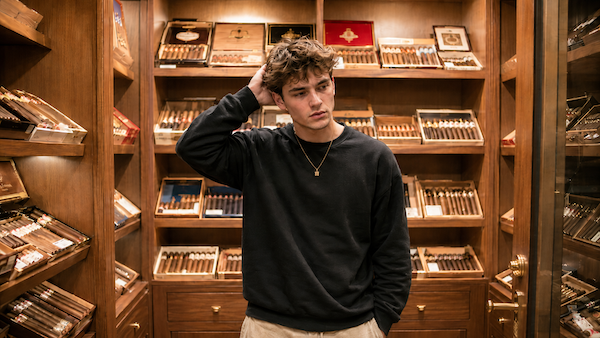
Walking into a walk-in humidor for the first time can feel overwhelming. The temperature, the smell, the rows of boxes, it's a lot. Here's how to navigate it without embarrassing yourself or damaging anyone's cigars.
DO THIS
- Ask the tobacconist to walk you through the options
- Look before you touch, most cigars don't need to be handled to evaluate them
- Hold a cigar near your nose at the foot (the open end) to get a sense of the aroma
- Tell them it's your first time, that information helps them help you
- Ask what they personally enjoy in the mild-to-medium range
DON'T DO THIS
- Don't press cigars against your nose, hold them near it
- Don't squeeze cigars like you're checking fruit at the grocery store
- Don't handle every cigar in the box out of curiosity
- Don't smoke inside the humidor room
- Don't insist Cubans are the only cigars worth considering
If you want more detail on humidor etiquette, from what to say, how to handle cigars, what questions are fair to ask, and what the unwritten rules actually are, we have a full dedicated guide: The Unwritten Rules of the Walk-in Humidor.
CUTTING YOUR FIRST CIGAR
When the tobacconist asks how you want it cut, say "straight cut, please." It's the most common method, works on virtually any cigar, and requires zero prior experience to get right. Once you've smoked a few cigars and have opinions about draw preference, you can explore the V-cut (creates a wedge channel that focuses the draw) and the punch cut (removes a small circular plug from the cap for a more controlled draw). For now, straight cut is your friend.
If you want the full breakdown of every cut method, what each one does, and when to use each style, read our complete guide: Six Ways to Cut a Cigar.
LIGHTING YOUR FIRST CIGAR
Take your time with the light. Toast the foot, the open, uncut end, by holding it a few centimeters above the flame and rotating the cigar slowly until the tobacco begins to glow evenly around the entire circumference. Then draw gently while continuing to apply heat. You're looking for a full, even char across the whole foot before you take your first real puff.
Use a butane lighter or wooden matches. Avoid cheap petroleum lighters, the fluid leaves a chemical taste that ruins the first few puffs. Torch lighters work well because they burn clean and hot, but hold them further from the foot than you might think necessary, you're toasting, not burning.
For the complete method, toasting technique, relighting tips, the right tool for each cigar shape, the full guide is here: How to Light a Cigar Properly.
HOW TO ACTUALLY SMOKE IT
This is the part most guides skip. You lit it, now what?
- Don't inhale. Cigar smoke belongs on the palate, not in the lungs. Draw the smoke into your mouth, let it coat your tongue and the back of your throat for a second, and exhale. That's it.
- Pace yourself. One puff every 45 to 60 seconds. Smoking faster makes the cigar run hot, which makes it bitter and harsh and brings the nicotine on hard and fast.
- Rotate the cigar. Every few puffs, give it a slow turn between your fingers. It helps the burn stay even.
- Don't tap the ash obsessively. A solid inch of ash is fine. Let it develop naturally, it helps regulate the burn temperature. Tap it gently when it reaches about an inch, or let it fall on its own.
- Pay attention. What do you taste in the first third? Does it change after the midpoint? Does the finish linger? This is how your palate develops, not from reading about it, from noticing.
WHAT TO DRINK WITH YOUR FIRST CIGAR
Keep it simple. Coffee and a mild Connecticut is one of the best beginner pairings there is, the bitterness of coffee balances the creaminess of the cigar, and the warmth is a natural companion. Other solid beginner options: water (always), iced tea, cream soda, root beer, or lemonade. Keep it easy and complementary. If you already drink whiskey, a light blend can work well, but if the drink is unfamiliar and the cigar is new, you won't know which one is causing any problems.
DON'T CHASE STRENGTH
This needs to be said directly: strength is not skill. Full-strength cigars are not automatically better than mild cigars. They are not a marker of sophistication. They just have more nicotine, and if your body isn't conditioned to it yet, they will end your evening early.
Some of the best cigars ever made are mild or medium. Many experienced daily smokers reach for a smooth Connecticut when they want balance, nuance, and a long enjoyable session without being punched in the face. Start where the experience is enjoyable. Explore from there on your own timeline.
QUICK BEGINNER CIGAR REFERENCE
| WHAT YOU'RE LOOKING FOR | WHAT TO ASK FOR |
|---|---|
| Smooth, creamy, easy first smoke | Connecticut Shade or Ecuadorian Connecticut wrapper, Robusto size |
| A little more character and flavor | Mild-to-medium Dominican or Honduran blend with Connecticut wrapper |
| Sweeter, more aromatic experience | Infused or aromatic cigar (ACID, Tabak Especial, Tatiana) |
| Coffee and cocoa notes | Coffee-infused cigar or a natural Cameroon-wrapper blend |
| Shorter smoke, 45 minutes or less | Robusto (5 × 50) |
| Slightly longer experience | Toro (6 × 50 to 6 × 54) |
| Safest beginner cut | Straight cut, ask the tobacconist to cut it for you |
| Best first pairing | Coffee, water, iced tea, or cream soda |
| Most important thing to do | Tell the tobacconist you're new and what you're looking for |
GLOSSARY
| TERM | WHAT IT MEANS |
|---|---|
| Body | How the smoke feels in your mouth, light and airy, creamy, thick and chewy. Body is about texture and presence, not nicotine strength. |
| Strength | The nicotine impact you feel physically, lightheadedness, a buzz, warmth in the chest. Separate from flavor and body. |
| Wrapper | The outermost leaf of the cigar. Contributes significantly to flavor, appearance, and burn quality. |
| Connecticut Shade | A light tan wrapper style grown under shade cloth. Associated with creamy, smooth, mild profiles. |
| Ecuadorian Connecticut | Connecticut-seed tobacco grown in Ecuador's cloud forest climate. Often silkier and slightly richer than domestic Connecticut Shade. |
| Maduro | A dark wrapper that has undergone extended fermentation. Brings cocoa, espresso, dark sweetness, and earth. Not always strong in nicotine despite its appearance. |
| Habano / Corojo | Wrapper styles associated with fuller flavor and often more strength, earthy, spicy, complex. Common in Nicaraguan and Honduran blends. |
| Cuban Cigar | A cigar made in Cuba with Cuban tobacco. Famous and historic, not automatically the best first cigar. |
| Cuban-Seed Tobacco | Tobacco grown from Cuban-origin seed outside Cuba. The cigar's character depends on where and how it was grown and blended, not the seed itself. |
| Infused Cigar | A cigar with added flavors or aromas, coffee, vanilla, rum, cocoa, botanicals. A legitimate style; always store separately from traditional premiums. |
| Ring Gauge | The diameter of a cigar measured in 64ths of an inch. A 50-ring cigar is 50/64 of an inch in diameter. |
| The Foot | The open, unlit end of the cigar, where you apply the flame when lighting. |
| The Head / Cap | The closed end you cut before smoking. The cap holds the wrapper in place. |
| Draw | The airflow through the cigar when you pull smoke through it. Good draw is effortless. A tight draw means too little air; a loose draw means too much. |
| Tobacconist | A cigar professional who can guide you through selection by strength, flavor profile, size, and budget. Your most valuable resource as a beginner. |
| Humidor | A humidity-controlled storage space, a walk-in room, cabinet, desktop box, or airtight container, that keeps cigars at the proper moisture level. |
FREQUENTLY ASKED QUESTIONS
Everything a new cigar smoker wants to know, answered without the gatekeeping.