Cuban cigars carry a legend so powerful it's practically become a religion, but legend and quality are two different things, and in 2026 the data keeps pointing in the same direction. Nicaragua, the Dominican Republic, Honduras, Ecuador, and Mexico's San Andrés Valley have built world-class tobacco industries from Cuban seeds, volcanic soil, and decades of hard-won expertise. The tobacconist has been trying to tell you this for years. Today we lay it all out.
TL;DR
- In blind taste tests, Nicaraguan cigars routinely outscore Cuban cigars, and they do it at a fraction of the price.
- Cuban cigars are notorious for construction inconsistency: tight draws, uneven burns, and box-to-box variance that would be unacceptable from any private manufacturer.
- Nicaragua, the Dominican Republic, Honduras, Ecuador, and Mexico all grow Cuban-seed tobacco in superior volcanic soils, in many cases, you're literally smoking Cuban genetics in a better environment.
The Question That Won't Die
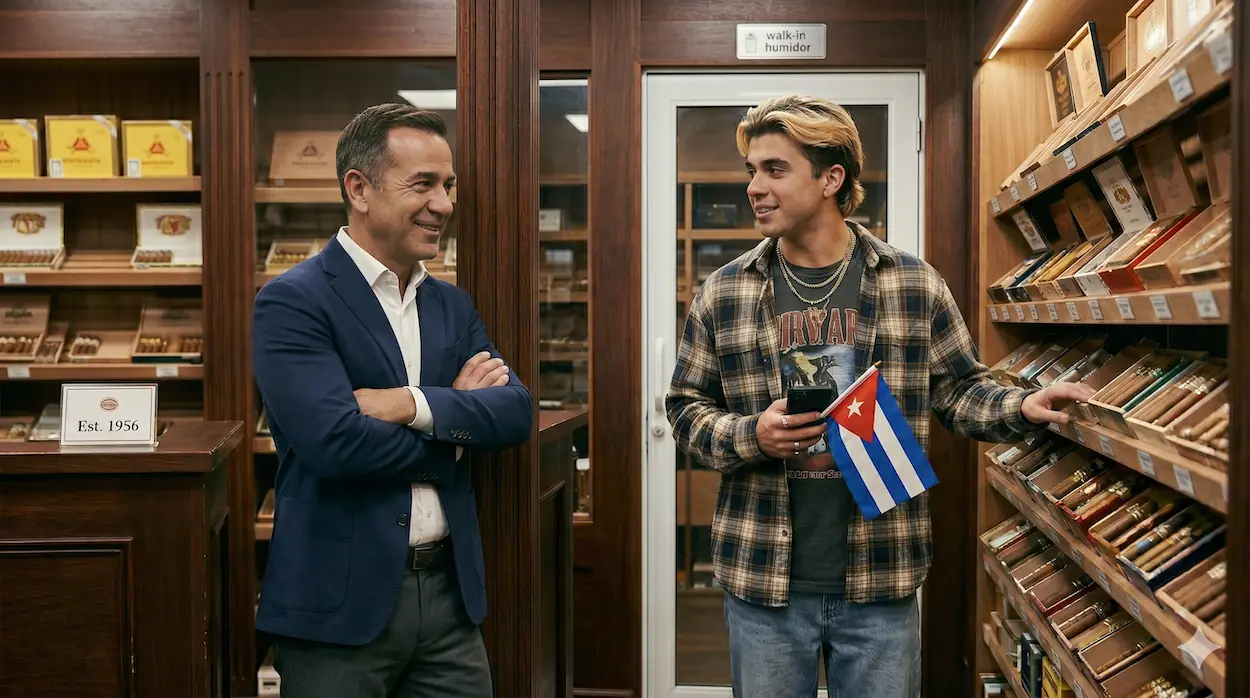
Walk into any humidor, anywhere on the planet, and within ten minutes you'll hear it. Someone picks up a box, turns it over, and asks the question. "But are Cuban cigars actually better?"
The tobacconist will smile. Tight. Polite. The kind of smile that says, I have answered this question 4,000 times and I will answer it 4,000 more. They'll take a breath, set down whatever they were doing, and begin.
It is the cigar world's most persistent, most divisive, and most fascinating debate. And unlike most barroom arguments, this one has a real answer, or at least, real data. Today we're going full investigative on it. No mythology. No nostalgia tax. Just tobacco, terroir, and the truth.
The Cuban Legend: How It Started
To understand why people are still asking this question in 2026, you have to understand what Cuba was, and what happened to it.
Before 1959, Cuba's Vuelta Abajo region in the Pinar del Río province was, without question, the most celebrated tobacco-growing terroir on earth. The soil, the humidity, the specific microclimate produced leaves of a complexity and character that were genuinely unlike anything else available. The great Havana houses, Cohiba, Montecristo, Partagás, H. Upmann, rolled cigars that set the global standard. European aristocrats, Hollywood icons, Winston Churchill: the Cuban cigar was not just a smoke. It was a symbol.
Then the revolution came. And with it, the exodus.
Cuba's master rollers, seed cultivators, and cigar-making families scattered across the Caribbean and Central America, taking their knowledge, their seeds, and their traditions with them. They landed in the Dominican Republic, Honduras, Nicaragua, and Miami. And they got to work.
What happened next is one of the most remarkable agricultural stories of the 20th century. Those Cuban seeds, the legendary Corojo, the Criollo, the Piloto Cubano, planted in new soils, in new climates, crossed with local varieties and refined over decades, began producing something extraordinary. Not Cuban. Different. And in many ways, better.
The Price Tag in the Room
Before we get into terroir and flavor, let's talk about the elephant. The very large, very expensive elephant.
A Cuban Cohiba Siglo VI, one of Cuba's flagship cigars, runs anywhere from $50 to $80 per stick at retail in markets where it's legally sold. A Cohiba Behike, the ultra-premium line, can push past $100 per cigar, and limited releases have gone significantly higher. At those prices, a box of 25 becomes a serious financial commitment.
Now compare that to a Nicaraguan Padrón 1964 Anniversary Series, a puro that regularly scores 93 to 96 points in blind tastings. You can pick one up for $18 to $28. An Arturo Fuente Don Carlos from the Dominican Republic scores consistently at the top of every major rating list and lands in roughly the same range. The investigative question writes itself: Is there a 2x to 3x quality gap that justifies the Cuban price premium? The data says no. Not even close.
What Blind Taste Tests Actually Show
The cigar world has a fact that the Cuban mystique lobby does not like to acknowledge: in blind tastings, where the band is removed and nobody knows the country of origin, Cuban cigars routinely lose.
Cigar Aficionado conducts its ratings entirely blind, specifically to provide the most objective buying information available. Their results consistently show Nicaragua producing a dominant share of top-scoring cigars year over year. Not Cuba. Nicaragua, a country that, as recently as the 1980s, was fighting a civil war in the same highland valleys where today's world-class tobacco grows. In 2025, Nicaragua produced 68 cigars scoring 90 points or above. Cuba had 15 tested, with 60% hitting the 90+ mark, down from 86% the year before.
Meanwhile, Cuban cigars are noted even by their fans for a characteristically smooth, mild-to-medium body that makes them approachable but not always complex. They taste different from most everything else on the market, yes. But "different" is not the same as "better." The construction data is equally telling: premium non-Cuban cigars are rarely plugged and rarely burn unevenly, and every cigar in a box tends to look like its neighbor. The same cannot be said of Cuban cigars, even from the top houses, which are known for tight draws, tunneling, canoeing, and inconsistent fermentation.
The New World's Secret Weapon: Volcanic Soil
So if Cuba's mystique is partly mythology, what explains the incredible quality coming out of Nicaragua, Ecuador, and Mexico? The answer is geology. Specifically, volcanoes.
Nicaragua: The Estelí Valley and Beyond
If you want to understand why Nicaraguan cigars are dominating the global stage, you need to understand Estelí. It's Nicaragua's second-largest city and the tobacco capital of the non-Cuban world. The region sits in Nicaragua's northern highlands, and its soil is something special: hard, black, mineral-rich volcanic earth that forces tobacco plants to work, and in doing so, develop extraordinary depth of flavor.
The fields of Estelí get intense sunlight during the growing season, producing leaves that are dark, rich, and hugely aromatic. The signature leaf is Ligero, the top leaf of the plant, richest in oils and nicotine, full-bodied and slow-burning. Estelí Ligero is considered among the finest on earth. Joya de Nicaragua, established in 1968, was the first Nicaraguan cigar brand, and the industry that grew around it transformed the entire Estelí valley.
But Estelí is not the only story. Nicaragua has five distinct growing regions, each contributing something different to the blending table:
- Estelí, Full-bodied, peppery, dark, and rich; the powerhouse of Nicaraguan tobacco and home to most of the country's major cigar factories
- Jalapa Valley, Smooth, creamy, and sweet; extraordinarily fertile soil produces gorgeous wrapper leaves
- Condega, Full-bodied and earthy, with a balance of sweet and spicy; mostly filler leaf but also prized wrappers
- Ometepe, Grown on a volcanic island in Lake Nicaragua; strong and toasty with some sweetness; complex to blend but unique in character
- Namanji, A newer region near Estelí; shade-grown wrapper leaf with exceptional flavor, pioneered by the Garcia family of My Father Cigars
Nicaraguan blenders can draw from five completely distinct flavor palettes within one country. Cuban blenders, working from the Vuelta Abajo, are working from one terroir, no matter how exceptional. The diversity advantage belongs to Nicaragua, and a significant portion of Nicaraguan tobacco is grown from Cuban seed varieties, specifically Corojo and Criollo, brought over after the revolution and refined over generations. In many cases, you are literally smoking Cuban genetics, grown in superior volcanic soil, by master blenders with complete control over their supply chain. The soil doesn't know what flag it's under.
The Dominican Republic: Old World Roots, New World Precision
The Dominican Republic is the other giant in this conversation, and it consistently gets less credit than it deserves. The primary growing region is the Cibao Valley near Santiago, fertile and warm, with a tradition of Cuban-seed tobacco cultivation dating back to the post-revolution exodus.
Dominican tobacco is known for smooth, creamy, aromatic flavors, notes of cedar, nuts, toast, and light pepper. It runs milder and more refined than Nicaraguan. Not designed to overpower you; designed to engage you. Brands like Arturo Fuente, Davidoff, and La Flor Dominicana have built entire empires on Dominican tobaccos, often paired with wrappers from Ecuador or Connecticut. The Arturo Fuente Opus X is an all-Dominican puro that regularly appears on "best cigars in the world" lists alongside the great Habanos, usually at half the price.
Honduras: The Underdog With Serious Bite
Honduras gets overlooked in this conversation, and that's a mistake. The Danlí region in southern Honduras produces tobacco that is earthy and rugged, medium to full-bodied, with prominent notes of leather, oak, minerals, and spice. Complex without being aggressive.
Brands like Camacho, Alec Bradley, Rocky Patel, and especially Aladino Cigars have developed passionate followings among experienced smokers who want something closest to the classic Cuban profile without the Cuban price tag or the Cuban inconsistency. For smokers who love the earthy, cedar, and leathery character of traditional Habanos, Honduras may actually be the most honest comparison available outside of Cuba.
Ecuador: The World's Wrapper Capital
Ecuador is the quiet genius of the cigar world. It doesn't grab the headlines that Nicaragua and Cuba get, but it may have the most important role in the global cigar ecosystem: wrapper leaf.
What makes Ecuador extraordinary is its unique microclimate: consistent cloud cover from the Andes acts as a natural sunlight filter, combined with volcanic soil that produces exceptional leaf quality. The result is thin, supple, silky wrapper leaves with fine texture, exceptional elasticity, and flavor notes that are clean, light floral, and herbal with a smooth finish.
Two main varieties dominate: Ecuadorian Habano (sun-grown, spicier, bolder) and Ecuadorian Sumatra (shade-influenced, silky, mild, widely prized specifically because it doesn't overpower a blend). Davidoff uses Ecuadorian wrapper extensively on its flagship lines. If you've ever smoked a truly beautiful cigar and noticed how flawlessly the wrapper was rolled, almost no veins, perfect even color, there's a good chance that leaf grew in the shadow of the Andes.
Mexico's San Andrés Valley: The Dark Horse
This one surprises people, and it shouldn't. Mexico's San Andrés Tuxtla Valley, located in the southeastern state of Veracruz near the Gulf Coast, is home to one of the most distinctive tobacco-growing regions in the world, and it has been growing tobacco since long before Cuban seed ever entered the conversation.
The Negro San Andrés varietal is an indigenous Mexican tobacco, not a Cuban hybrid. Cultivated in volcanic, mineral-rich soils for centuries. What makes San Andrés unique is its extreme versatility: harvested earlier and fermented at lower temperatures, it stays medium-brown with nutty, mild cocoa flavors. Subject it to prolonged high-heat fermentation at 120 to 135 degrees Fahrenheit and it becomes one of the finest Maduro wrappers on the planet, deep espresso-brown to near-black, with natural chocolate-earth sweetness concentrated entirely through fermentation, no flavoring added.
The flavor profile is unmistakable: dark chocolate and damp earth on the front end, mild black pepper through the middle, and subtle mineral sweetness on the finish, a direct gift from the volcanic soil. Drew Estate, RoMa Craft, Tatuaje, and Crowned Heads are among the prominent brands who have made San Andrés wrappers a cornerstone of their premium lines. If you've never smoked a San Andrés Maduro and still call yourself a serious cigar smoker, consider this your homework assignment.
The Cuban Seed Question: Nature vs. Nurture
For decades, the Cuban mystique rested on the idea that Cuban genetics, Corojo, Criollo, Piloto Cubano, were magical, and that those varieties could only express their full potential in Cuban soil. That argument has been systematically dismantled over the past 30 years.
Cuban-seed tobaccos are now grown across Nicaragua, Honduras, the Dominican Republic, Ecuador, and even parts of Connecticut and Pennsylvania. Each terroir does something different to the same seed. Nicaraguan volcanic soil produces a bolder, spicier expression of Corojo than anywhere else. Dominican soil mellows it out and adds creaminess. Honduran soil brings out woody and earthy notes. Meanwhile, hybrid programs have produced entirely new varieties combining the best traits of Cuban and local genetics, something that didn't exist in nature until blenders started experimenting.
The science is similar to wine. Take a Cabernet Sauvignon grape from Bordeaux and plant it in Napa Valley, and you get a different wine, arguably a better wine by some measures, because the California sun and soil transform the same genetic material differently. Cuban seed is just genetics. Soil, climate, fermentation, and blending expertise are what turn genetics into greatness. That kind of innovation happens constantly in Nicaragua, Honduras, and the Dominican Republic. It is virtually impossible in Cuba's state-run Habanos S.A. system, where the mandate is to replicate, not innovate.
Cuba's Real Problem: Quality Control
This is the part of the conversation where tobacconists get really honest, if you push them.
Cuba's cigar industry is run by Habanos S.A., a joint venture between the Cuban state and Imperial Brands. It is a government enterprise. And government enterprises are not historically known for their obsessive attention to detail. The rollers are paid by the state. The tobacco is allocated by the state. The distribution is controlled by the state.
The result is inconsistency on a scale that would be unacceptable from any privately-owned manufacturer. Common complaints documented consistently across enthusiast communities and industry publications include:
- Tight, plugged draws that make the cigar nearly impossible to smoke
- Tunneling and canoeing, uneven burns that destroy the experience
- Inconsistent fermentation, producing cigars that taste flat, harsh, or simply wrong
- Box-to-box variance so significant that buying a box of 25 is considered a gamble, even by experienced collectors
There is also the counterfeiting problem, which is substantial. Cohiba is the most counterfeited cigar brand in the world, meaning even when you think you're buying a genuine Habano, you may not be. That risk simply does not exist with established private-label manufacturers from Nicaragua, Honduras, or the Dominican Republic.
Compare the real thing to a Padrón, a My Father, an Oliva, or an Arturo Fuente. These are family-owned businesses where the founder's name is on the box. Their quality control is meticulous. Their construction is consistently excellent. And they are priced at a fraction of the Cuban equivalent.
The Value Verdict: What Are You Actually Paying For?
A box of 25 Cohiba Siglo VI in markets where they're legally sold runs well over $1,500 to $2,000 at retail. A box of 25 Padrón 1964 Anniversary Series Natural runs approximately $450 to $550. Both cigars regularly score in the 93 to 96 range in blind tastings. The Cohiba costs three to four times as much.
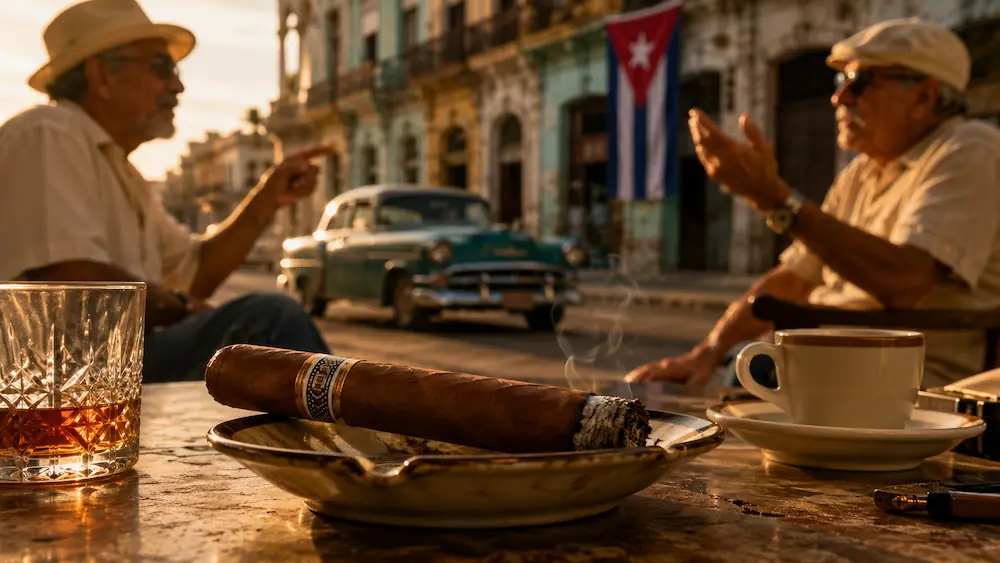
What you're paying for with Cuban cigars is, in large part, mythology and scarcity. The long-standing U.S. embargo has significantly increased demand among those who have never actually tried one. The history, the romance, the idea of smoking what Churchill smoked, it's all baked into that price premium. None of it affects how the smoke actually tastes going down.
For experienced smokers, the Cuban premium can occasionally be worth it. When you get a great one, well-constructed, properly fermented, properly humidified, from a good factory on a good day with the right age on it, it is a remarkable experience. Nobody's arguing otherwise. But the odds of getting that perfect Cuban are significantly lower than the odds of getting a perfect Nicaraguan, Dominican, or Honduran smoke at a fraction of the cost. That is not an opinion. That's broadly documented, widely observed reality across the global cigar community.
Regional Flavor Cheat Sheet
| REGION | FLAVOR PROFILE | STRENGTH | BEST KNOWN FOR |
|---|---|---|---|
| Cuba (Vuelta Abajo) | Earthy, leathery, floral, cedar, hints of pepper | Mild–Medium | Heritage; the original benchmark |
| Nicaragua (Estelí) | Peppery, dark, rich, espresso, dark chocolate | Medium–Full | Blind test dominance; Ligero depth |
| Nicaragua (Jalapa) | Smooth, creamy, sweet, aromatic | Medium | Elegant wrappers; blend balance |
| Nicaragua (Condega) | Earthy, nutty, full-bodied with sweet-spicy notes | Medium–Full | Filler leaf; blending balance |
| Dominican Republic | Smooth, creamy, aromatic; cedar, nuts, toast, light pepper | Mild–Medium | Consistency; world-class puro production |
| Honduras (Danlí) | Earthy, rugged; leather, oak, minerals, spice | Medium–Full | Classic Cuban-profile alternative |
| Ecuador | Clean, light floral, herbal; smooth finish | Mild–Medium | World-class wrapper leaf |
| Mexico (San Andrés) | Dark chocolate, damp earth, black pepper, mineral sweetness | Medium–Full | Maduro wrappers; indigenous varietal |
GLOSSARY
| TERM | DESCRIPTION |
|---|---|
| Corojo | A classic Cuban tobacco variety known for bold, spicy, and complex character. Originally from Cuba's Vuelta Abajo, now grown extensively in Nicaragua, Honduras, and Ecuador, where different soils produce different expressions of the same genetics. |
| Criollo | Another foundational Cuban seed variety, slightly milder and creamier than Corojo. Widely grown in new-world producing countries as a filler or binder leaf and a cornerstone of Dominican blends. |
| Piloto Cubano | A Cuban-origin seed variety favored in the Dominican Republic. Full-flavored and well-suited to complex blends, the genetic backbone of many of the world's finest Dominican cigars. |
| Ligero | The uppermost leaf on a tobacco plant. It receives the most sunlight, contains the highest oil and nicotine content, burns slowest, and delivers the most body and strength of any leaf on the plant. Estelí Ligero is considered among the finest in the world. |
| Puro | A cigar where every component, wrapper, binder, and filler, comes entirely from the same country. The Padrón 1964 Anniversary Series and the Arturo Fuente Opus X are two of the most celebrated puros in the world. |
| Vuelta Abajo | Cuba's most prized tobacco-growing region in Pinar del Río. Home to the legendary growing conditions that made Cuban cigars famous, considered the original gold standard of cigar terroir. |
| Terroir | The complete natural growing environment of a tobacco plant: soil composition, altitude, humidity, rainfall, temperature, and microclimate. The same seed in different terroirs produces meaningfully different flavor, body, and aroma. |
| Habanos S.A. | The state-controlled Cuban company that manages all Cuban cigar production and global distribution. A joint venture between the Cuban government and Imperial Brands. |
| Negro San Andrés | The indigenous tobacco varietal of Mexico's San Andrés Tuxtla Valley, a thick, oily leaf grown in high-mineral volcanic soil. After extended high-heat fermentation it becomes one of the world's finest Maduro wrappers. |
| Maduro | A wrapper leaf fermented at high temperatures for an extended period, typically reaching 120–135°F. The result: a dark, naturally sweet leaf with concentrated flavor and no added flavoring. |
| Torcedor | A highly trained cigar roller. In Cuba, torcedores are employed by the state. In Nicaragua, Honduras, and the Dominican Republic, they work for family-owned factories where their reputation is tied directly to the product. |
| Blind Taste Test | An evaluation in which tasters have no knowledge of the brand or country of origin. Used by Cigar Aficionado and others to remove psychological bias. Consistently produces results that favor non-Cuban cigars. |
| Binder | The leaf that holds the filler together beneath the wrapper. It contributes to structural integrity, burn characteristics, and overall flavor. |
FREQUENTLY ASKED QUESTIONS
Everything you want to know about Cuban cigars vs. the world.